 Miju Labs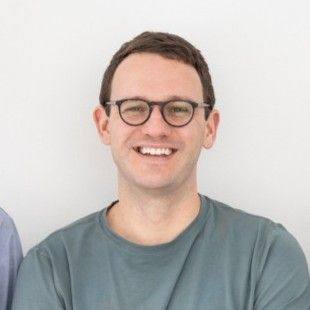
Background
Duhaime did his PhD at MIT Sloan's Center for Collective Intelligence under Thomas Malone (completed 2019), after an MPhil in human evolution at Cambridge and a BA in economics and biology at Brown (per YesPress profile).
The founding story, as told in profiles: he watched his wife, then a medical student, spend hours on quiz apps, and combined that with research showing aggregated student judgements beat individual specialists on skin-lesion classification. The result was DiagnosUs, a competitive diagnosis app that pays for accurate answers and emits labeled data. Centaur went through Y Combinator (W19) and raised a $15M Series A led by Matrix Partners (2021) and a $16M Series B (2024).
What they run now
Runs the company and is its main public voice. Current messaging (2026) is about dynamic labeling pipelines: aggregate several diverse experts, use disagreement to escalate hard cases, and deliver confidence estimates with labels. The website shows a push beyond healthcare into LLM/software, insurance, robotics and finance customers.
Career
- 2017 – presentCo-founder & CEO, Centaur Labs / Centaur AI
- 2019PhD researcher, MIT Center for Collective Intelligence
- completed 2019MIT Sloan School of Management, PhD — collective intelligence, advisor-lineage with Thomas Malone
- —University of Cambridge, MPhil (Human Evolution)
- —Brown University, BA (Economics & Biology)
On the record
Expert opinions should be weighted by measured accuracy, not years of experience or credentials. source
You want more than one annotator per case, and not several who all think alike. source
When annotators disagree, the case should be escalated automatically for more votes; finding controversial cases early is valuable. source
Aggregating humans and models beats either alone (Centaur cites 92.1% vs 91.4% top human vs 90.8% top AI on a skin-lesion task). source