 Miju Labs
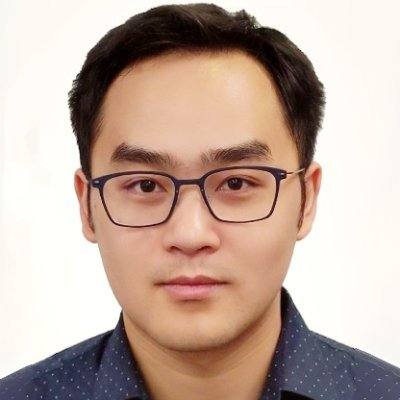
Background
Yu did his PhD at the University of Illinois Urbana-Champaign on image generation and inpainting, then worked at Google Brain on large vision-language and text-to-image models (PaLI, Parti, CoCa). He moved to OpenAI as perception lead, contributing to the multimodal capabilities of GPT-4o and later models, and was recruited to Meta in June 2025 during the Superintelligence Labs hiring wave.
At Meta he built and led the multimodal direction inside TBD Lab alongside Zuckerberg and Alexandr Wang. His team's shipped output — Muse Spark (April 2026, the first model under Alexandr Wang, powering Meta AI), Muse Image, Muse Video, Voice Mode — is Meta's visual-generation line. Muse Spark 1.2 shipped eight days before he announced his departure. He said he was drawn to a problem that would shape humanity's future and remains largely unexplored, without naming it.
What they run now
Until August 2026: Meta's multimodal model line. Now: an unnamed new company. Nothing public about its domain.
What they buy
Nothing, currently. As Meta's multimodal lead he would have specified image and video preference data, aesthetic tuning and instruction-following judgements for the Muse line. If his new company is in generative media he becomes a founder-stage buyer who moves fast and has capital — a different and often better customer than a lab procurement process.
Career
- 2023Research scientist, Google Brain — PaLI, Parti, CoCa
- 2023 – 2025Perception lead, OpenAI — Multimodal capabilities incl. GPT-4o
- 2025-06 – 2026-08Multimodal lead, Meta Superintelligence Labs (TBD Lab) — Muse Spark, Muse Image, Muse Video, Voice Mode
- 2026-08 – presentFounder, Undisclosed startup — Company and domain not announced
- —University of Illinois Urbana-Champaign, PhD, Computer Science
- —University of Science and Technology of China, Bachelor's
On the record
He said he is leaving to work on a problem that will profoundly shape humanity's future yet remains largely unexplored. source