Miju Labs

← All buyers · OpenAI

Szi-chieh Yu

Human Data — data lead for multimodal / image generation · OpenAI

medium confidenceTier A · Talk to firstFrontier labsimage

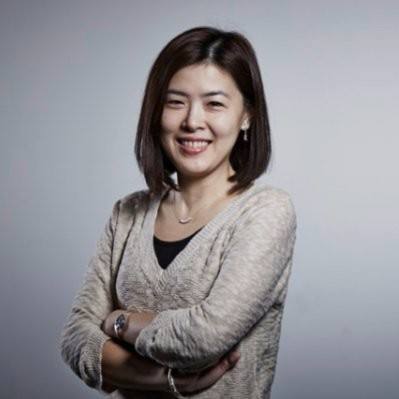
Yu is a programme manager on OpenAI's Human Data team who says on her own site that she builds the data-collection pipelines for OpenAI's models and has led data initiatives across multimodal and reasoning models, image generation included. She is credited in the 'Data' group for GPT-4o image generation and in 'Data & Evaluation' for ChatGPT Images. Of the OpenAI human-data staff who can be named publicly, she has the clearest and longest-running attachment to image data.

Background

Yu spent more than a decade in neuroscience before OpenAI, working on synaptic recycling and whole-brain connectomics. At Princeton she contributed to the MICrONS project (the mouse visual cortex wiring diagram) and to FlyWire, the first complete connectome of an adult fruit fly brain; earlier she was at Goethe University Frankfurt and the University of Illinois at Chicago. Her own site cites 60+ publications and over 4,600 citations.

Connectomics is, operationally, a very large human-annotation programme — thousands of proofreaders reconciling machine segmentation of image data. That is close to identical in shape to frontier-lab human data on images, and it explains the move: she went from managing distributed expert annotation of visual data in science to doing it for OpenAI's multimodal models.

What they run now

Data-collection pipelines for OpenAI models. Her own description names two threads: multimodal (including image generation) and reasoning (she claims contribution to the IMO gold-level maths result). In the public credits she is in the 'Data' section of GPT-4o image generation (Mar 2025) and the 'Data & Evaluation' section of ChatGPT Images / gpt-image-1.5 (Dec 2025) — i.e. she persisted across two generations of the image model, which is the strongest available signal that image data is her standing beat rather than a one-off.

What they buy

Image and multimodal training and evaluation data: prompt sets, reference imagery, preference pairs and human grading for image generation and editing, plus reasoning data on the maths side. She is a specifier and pipeline owner, not a contract signer — she would define the task, the rubric and the qualification bar, and a vendor would staff it. Her connectomics past suggests she is comfortable with very large distributed annotation programmes and will judge a vendor on inter-annotator agreement and throughput, not on narrative. Vendor identities are inference.

Career

  1. presentProgram Manager / Member of Program Staff, Human Data, OpenAI — Leads data initiatives across multimodal and reasoning models, per her own site
  2. —Researcher, connectomics (MICrONS, FlyWire), Princeton University — Whole-brain connectome mapping
  3. —Researcher, neuroscience, Goethe University Frankfurt (Buchmann Institute)
  4. —Researcher, University of Illinois at Chicago

On the record

Her own remit · 2026

Describes herself as working at the intersection of people, data and AI, and as focused on building data-collection pipelines for OpenAI's models. source

Interviews & talks

Why it matters here

Very high, and arguably the best technical fit in this batch. Julian sells human judgement on images and visual design; Yu is the named person at OpenAI whose job is the human-data pipeline for image generation across two model generations. She is also scientifically literate about annotation quality, which means a well-constructed quality argument (agreement statistics, expert qualification, rubric reliability) will land with her where a commercial pitch would not.

How to reach

She publishes a personal site with X and LinkedIn links, so a short, technical approach on either channel is legitimate. Open on measurement, not on supply: how do you get reliable human signal on aesthetic quality when annotator agreement is low by construction — and offer Julian's actual answer (panel qualification, forced-choice preference design, calibrated graders drawn from practising designers). A connectomics-to-image-annotation parallel is a genuine, non-flattering point of contact. Speculation: she is likely the right person to hand a sample dataset to, because she can evaluate it herself.

What we could not establish
  • Exact OpenAI start date and internal level not established.
  • Education (degrees, institutions) not verified — only research affiliations.
  • Her IMO-gold and reasoning contributions are self-described on her own site and not independently confirmed.
  • Whether she is still on image data in 2026 or has moved to reasoning.

Why they are on the map

Listed under 'Data & Evaluation' in ChatGPT Images (gpt-image-1.5) credits source — evidence dated 2025-12

Runs vendor projects; decides if a pilot converts.

How OpenAI buys data

Has a dedicated Human Data team that 'turns human feedback into reliable signals for training and evaluation' via bespoke campaigns with 'external vendors and AI trainers' and has open PM/TPM/EM/TLM roles on it (2025-26 job posts). Ended its Scale AI relationship after Meta's stake (Jun 2025); reported to be a major revenue source for Mercor and to use Surge and Handshake, while building in-house data capacity. GDPval (Oct 2025) and HealthBench (May 2025, 262 physicians) show it buys large expert-graded eval sets. Image models ship with a named 'Data & Evaluation' team (Dec 2025 credits).

A central Human Data team (PMs, TPMs, engineers) works with all research teams and vendors. Glaese, a former Human Data lead, is now VP Research & Safety (Jul 2026). Image generation sits under Multimodal (Dhariwal), with its own data leads and an 18-person Data & Evaluation group, plus Model Behavior. Sora was shut down in Mar 2026 and Peebles left in Apr 2026. Image work was folded into GPT Image 2 / 2.5.

Known vendors: mercor, surge-ai, handshake-ai, scale-ai (ended Jun 2025)

Sources

  1. Her personal site (role, career, links)
  2. Introducing 4o Image Generation credits (Data)
  3. New ChatGPT Images credits (Data & Evaluation)
  4. Google Scholar profile