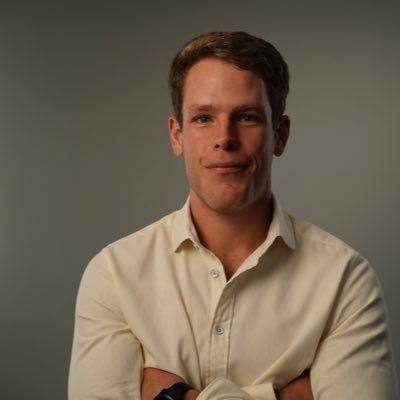
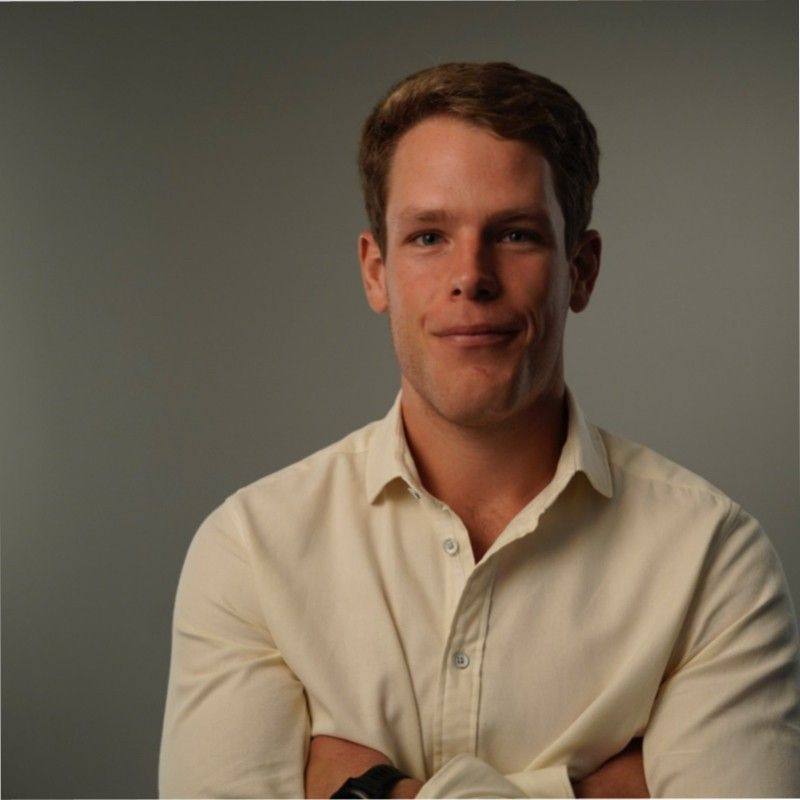
Co-founder and CEO of Handshake, who 're-founded' the 12-year-old career network around AI training data. It went from zero to $1B+ gross in about 16 months and he was named to the TIME100 AI 2026. He is the main public voice framing AI tutoring as a new part-time profession.
high confidenceSan FranciscoAt Handshake AI since 2014Updated 2026-09-19
Background
Studied computer science at Michigan Tech, where he met co-founders Ben Christensen and Scott Ringwelski. A Palantir internship showed him how hard it was for companies to reach students outside elite schools. The trio pitched career centres from a Ford Focus and signed Wabash College in 2014.
Handshake AI was conceived around the 2024 Christmas party and launched in January 2025 as a 'startup inside a startup' with separate teams and offices. In October 2025 Lord declared a company-wide refounding and cut ~100 of 650 US staff.
What they run now
Scaling Handshake AI with eight frontier labs and hundreds of thousands of contributors, data quality (Cleanlab), new data types (improv actors, $30K document purchases), and managing contractor-pay controversies.
Career
2014 – presentCo-founder & CEO, Handshake
—Intern, Palantir
—Michigan Technological University, Computer Science (major) — graduation status not verified
On the record
New profession · 2026-08
Pitches expert AI training as an emerging profession: a part-time 'AI tutor'. source
Humans in the loop · 2026-04
Argues RL on 'unverifiable' tasks needs more human trainers, not fewer. source
Quality at volume · 2025-10
Claims Handshake can deliver higher quality at higher volumes, faster than any competitor. source
AI and junior jobs · 2026-03
AI tools are an 'Iron Man suit' making young employees far more productive rather than replacing them. source
Expert pay · 2026
Says contributors average $100-125/hour, with MDs/PhDs at $300+. source
Recent posts
33 posts archived · most engaged first, then the latest
SEPT ’26: HUMANS STILL VERY MUCH HAVE JOBS.
AI isn't even close to meeting the standard required of the most junior professionals in banking, advisory, and private equity today.
ATLAS Finance agents must navigate complexity like a human does: "Johnny you just got staffed - check your email."
Human: 100%.
Best AI: 12%.
Agents have access to data rooms, email, chat, calendars, docs, notes, Excel, etc. Our real finance professionals pushed the realism frontier further by building dozens of coworker and client personas that introduce ambiguity, (controlled) contradictions, and real-time updates that must be adjudicated to successfully complete the client-ready deliverable.
We gave 11 frontier models 100 expert-level tasks that each take humans 15–30 hours.
On Wall Street there's a saying, "If it's 95% right, it's 100% wrong." Autonomous knowledge work outside software still has a very long way to go.
Co-Founder @ Handshake - We’re Hiring! | Time AI 100 & Forbes 30 Under 30
•
Latest from Jonas: “Our research community needs to do better. Better evaluations that penalize such reward hacking, and better model training that does not give rise to this grader obsession -- so that models focus instead on accomplishing what users actually want.”
Latest from @jomulr: “Our research community needs to do better. Better evaluations that penalize such reward hacking, and better model training that does not give rise to this grader obsession -- so that models focus instead on accomplishing what users actually want.”
Co-Founder @ Handshake - We’re Hiring! | Time AI 100 & Forbes 30 Under 30
•
Pacing the frontier matters. Keeping these models aligned matters. I'm all for it.
It is also a very convenient narrative. Staying focused on what models might do keeps everyone from looking at what they're actually doing in the real world right now.
I'm speaking Fortune 500 CIOs and CEOs constantly. Outside of software engineering I'm struggling to find firms that have agentified an end to end process and can show me the ROI.
Token costs are going straight up. The productivity gains are real and they are nowhere near 2 to 4x.
The Information
Handshake owns the largest early-career supply pool (art, design and film students and grads included), which is exactly where cheap-to-mid-priced creative experts come from; it has already bought unusual creative data (improv actors). A taste specialist competes with — or could feed — this supply. High relevance.
How to reach
Public on X/LinkedIn and lists a public work email in Lenny's notes. What resonates: supply quality and the new-profession narrative. Ask whether Handshake AI runs design/visual-judgement projects and how it vets taste without credentials (speculation).
What we could not establish
Whether any new funding round or valuation mark happened in 2026.
 Miju Labs